Friday, May 8, 2009

Star Trek


Watching "Star Trek," I am reminded of a line from "The Spirit," (it fits, so sue me) 'the shiny thing to end all shiny things.' J.J. Abrams take on the mythos of boldly going where no one has gone before epitomizes everything the technology of 2009 affords modern film makers. Loud, fast paced and perhaps the most visually stunning movie I have ever seen, this trek into the outer reaches of space has all the adventure of the stars but little of the finesse of its predecessors.

Taking full advantage of the liberties one is allowed with the ultimate deus ex machina of time travel, this is a whole new NCC-1701 with a whole new crew resembling the original cast in little more than name, but for most that is all right. Chris Pine is an uncouth and uninhibited Kirk to William Shatner's more refined version, playing off the likes of Karl Urban, Anton Yelchin and Zachary Quinto as they try to fill out the iconic shoes of DeForest Kelley, Walter Koenig, and Leonard Nimoy as Bones, Chekov and Spock.

At times more over the top than their predecessors, the entire cast tries its best, Star Fleet Officers of 2009 who nevertheless would stand out like sore thumbs in 1966. Of course, this is not a Federation of Planets of 50 years ago, it is instead a voyage through the space lanes for a modern age with a modern feel and modern characterizations. Abrams appears to acknowledge the limitations of capturing icons from almost 50 years ago while making them relevant for the modern age.

Of course, relevance and nostalgia don't mix, the latter traded for the former, appeasing an audience that little remembers the original Kobayashi Maru. Those who look at this incarnation and shout HERESY should be reminded that their love for the original is not enough to bring in the kind of blockbuster box office revenues this new, shiny version promises.

2009 is a very different time from 1966, with new fears and new demands, perhaps less interested in the optimistic and deeply resonant introspection of the original Trekkers and more interested in explosions and gunfights and pretty pretty lights. Boundless fun, you board the Enterprise and leave all previous impressions of its bridge, crew and history in the airlock.

Strap yourself in and enjoy the thrills, Hollywood isn't always as faithful to its past as it should be, but this time at least it has created a movie that is as much supercharged theme park thrill ride as it is story.

Thursday, April 30, 2009

X-Men Origins: Wolverine


“X-Men Origins: Wolverine” takes too many liberties. With plausibility, with plot, with characterization, with common sense and established plot within the framework of the X-Men film franchise. Worst of all, the film takes too many liberties with the depiction and back story of one of the most iconic of all Marvel superheroes.

Hugh Jackman remains an excellent Wolverine, full of feral fury and unstoppable death dealing, a bull in a very delicate china shop who struggles to find humanity even as he slips into the deadliest killing machine alive. But Jackman can only react as his Wolverine is put through the nonsensical ringer of a plot that spins around and around until you’re dizzy, confused, and begging for the spinning to stop and the sense to return. It doesn’t.

Wolverine’s relationships and back story, both in the comics and even in the film franchise itself, is butchered almost beyond recognition. Alas, to spoil it would be irresponsible but then again, to go see it is in and of itself an irresponsible act. Silver Fox is changed. The rivalry/history between Wolverine and Sabretooth is defiled. Wolverine’s time with and relationship to the Weapon X program and Colonel Stryker is irrevocably butchered, to the point it resembles nothing, not the depiction in the comics, not the depiction in the films.

Wolverine’s origin becomes nothing save for a barely conceived plot about running and jumping and slashing and stabbing and all kinds of nonsense that doesn’t work and shouldn’t be allowed, superpowers or not. One does not expect a great deal of realism when dealing with the x-gene, with mutants and powers and the children of the atom. Just watching or reading such a story requires an extraordinary leap of faith. But leaps of faith are meant to be rewarded, something that never happens in the film.

Instead, we get a lot of flashy nonsense that is neither compelling nor even tacitly plausible, a betrayal of everything we expect from these films. Instead of a reversal of the bastardization of the X-Universe by one Brett Ratner, it is a continuation of it, only a little bit better looking and only tacitly more thoughtfully conceived.

Considering how much I was initially looking forward to the movie and how much potential it had, "Wolverine" is evidence that Hollywood has lost the ability to remain faithful even to itself, capable of films with no plot, no sense and no compelling reason to waste $8.50.

Tuesday, April 21, 2009

Fighting


It’s amazing how little of the title activity actually takes place in “Fighting.” Channing Tatum plays Sean MacArthur, a garden variety struggling citizen of the Big Apple who sells whatever anyone will buy and happens to know how to throw a punch. In formulaic fashion, he meets up with Terence Howard’s Harvey Boarden who fixes MacArthur up with some illegal, high bet prize fights the proceeds of which he hopes to use to help his down-on-her-luck love interest, Zulay Valez, played by Zulay Henao. Moderately funny at times, “Fighting” meanders through its 105 minutes with a little action totally 3 and a half fights and a lot of needless and pointless plot.

“Fighting” is a complete and utter rip-off of Jean-Claude Van Damme’s “Lionheart” but without the pesky details like compelling back story or understandable dialogue. Instead of back story we get some mild daddy issues from MacArthur and a lot of attempted tension between him and his college wrestling rival, Brian White’s Evan Hailey. Other than that and a few slightly soulful glances between MacArthur and Zulay, the story of “Fighting” neither makes nor tries to make much in the way of sense.

As for the title activity, for a movie that would seem like it revolves around violence and ‘fighting,’ the action of the film is rather typical and not particularly extensive. Fairly well choreographed and accurate in its depictions, there is nothing special about the fights albeit the camera work does do a good job of capturing the intensity; most of the time you have a pretty good idea of who is throwing the punch and who is taking it.

In a lot of ways “Fighting” should really be called ‘Mumbling.’ Barely discernable and highly irritating, everything and everyone mumbles and stumbles through the film. The dialogue mumbles, the delivery mumbles and the plot mumbles. Shuffling its way across the floor, the movie itself would lose most fights it gets into, unsure of itself and so poorly edited that it never has the dexterity, mobility or energy to bounce around the ring, stinging like a mosquito and floating like a spider.

“Fighting” and the people in it do not live up to expectations. Channing Tatum is not a warrior badass but just a guy who wins just because, because well, the plot says he does. Zulay is given a funny old grandmother and cute young daughter to nag and doughfully look at MacArthur, respectively. The biggest disappointment of all is Oscar nominee Terrence Howard. His Harvey Boarden never really talks in a straight line, he is in fact the mumble king of the film, his lips move a lot and sound comes out, but he says next to nothing. Quirky and weird, we do not understand Boarden and really, we don’t want to.

“Fighting” is not extraordinarily bad, it just isn’t really any good. Prototypical about street-‘fighting’ films and the like, the action is tolerable and the acting just isn’t up to the expected par. Sometimes you just have to roll with the punches and sometimes you need to know there are fights not worth fighting and should just be walked away from.

Considering I actually was a little hopeful for "Fighting," the film is definitely another nail in the coffin. That being said, I should have known better and it isn't a very big nail, but it is there.

Tuesday, April 14, 2009

State of Play


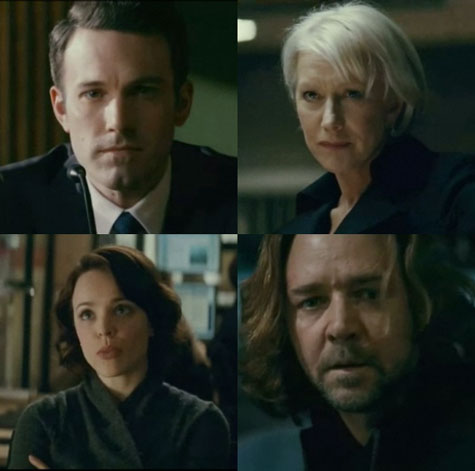
“State of Play” is at once a hyper-relevant exploration of Washington and 21st century power plays while deftly navigating the living, breathing streets of the city of Washington, D.C. from the eyes of a dying breed.

Russell Crowe’s Cal McAffrey is a dinosaur, a relic of printing presses past and he knows it. A staff writer for “The Washington Globe,” an incredibly thinly disguised “Washington Post,” Cal drives a 19 year old car and types on a 16 year old computer. Long hippy bangs and a well fed belly earmark him for future status as a fossil fuel for electric cars of the new age, angle and opinion driven, sensationalist web journalists exemplified by Rachel McAdams’ Della Frye. With the paper under new ownership, the pair are constantly hounded not just about doing the stories but about selling the prints as the film intones journalism as we know it’s death knell, a time where getting the story and getting it right is no longer everything there is, there is also getting it first and getting it last and getting it bought.

Together the still working cliché of the gray shaded vet and wide eyed newbie traverse the halls of power, digging through a tangled web woven between a U.S. Congressman, one Stephen Collins played by a contemplative but oil slick haired Ben Affleck and his dearly departed aide with whom he’d been having an affair. Careful not to use any actual names, the film points a fat finger at government contracting PointCorp, a thinly veiled analogy to Blackwater and Halliburton as the Globe is to the Post. Of course, there always has to be the inside man or men, politicians on the take and under the extramarital sheets.

“State of Play” makes no attempts to hide its role as epitaph to journalism and journalists past and present but without future. Everything about Cal screams gruff and tumble reporting with cigarettes and whiskey and instead of wild, wild women, memories of Woodward and Bernstein to drive him insane. There may be no clandestine meetings in parking garages with Deep Throat, but that didn’t stop director Kevin Macdonald from making The Watergate Hotel a prominent location and one nameless, nonexistent spook of an informant a key plot point.

Of course, the film is as much journalistic advertisement as it is death toll. Little in the way of action occurs despite the high tension and ever looming threat of shady men in dark alleys with bulges in their pockets. Instead, the film is very much a reporter’s movie, with ink to paper and fingers to keyboard as the intrepid reporters gallantly seek out the source, making phone calls and sticking feet in doors to get the interview and the scoop. Fortunately for “State of Play,” the depictions of reporting never feel contrived but instead have a sense of extreme realism. The audience feels a bit like a reporter with pad in hand, rifling through the story piece by precious piece as the many disjointed ends slowly resolve themselves without ever giving the plot away.

Few films manage to involve the city of Washington, D.C. as thoroughly as “State of Play.” More than just a few scant looks at the Capitol and night shots of the Washington Monument, the city comes alive as those familiar see literally dozens of notable landmarks, constantly making mental notes that they were there, becoming ever more a part of the story, not just a viewer but a bystander watching the cars and reporters and rolls of newspaper waft by.

“State of Play” makes its points and it makes them well. A bold and tense exploration of Washington, the city and its politics, it involves the audience in the life and times of reporting, perhaps a little more adventure and a little less droll reporting but still ultimately speaking a level of truth about the power of the pen. Great acting and a thrilling plot make the two hours fly by in a whirl of pen and ink and the power of the press.

A journalist myself, Hollywood once again proves it can remind me why I love something. The film industry still has the strength within itself to make a story exciting and compelling and human without lots of explosions but instead mounds of relevance and reflection.

Wednesday, April 8, 2009

The Informers


The most likely question any given member of the audience misguided enough to watch “The Informers” is: Am I meant to take this seriously? Between the globbed on hair gel of 1983 hairstyles, pointless plot, disconnected acting and copious amounts of random and pointless sex the most likely answer is a resounding NO. At least, one would hope that director Gregor Jordan actually intended viewers to leave the theater with a headache and the knowledge that early 80s Los Angeles was full of omni-sexual, drug fueled mannequins attempting to pass for really shoddy impersonations of human beings.

“The Informers” is nominally about the interconnected lives of LA’s super rich, super aimless and super drugged up population with a rock star, a criminal and a TV anchor thrown in for good measure. What exactly these characters are trying to do or what Jordan is trying to prove never comes to the fore, the film mostly just middles in pointless inanity with the occasional orgy and supposedly emotional catharsis that never goes anywhere.

A scene where a character isn’t drunk, naked, toked out of his mind or just out of synch with reality occurs sparsely if ever, these are characters you can’t possibly relate to or understand unless you’ve partaken of Freudian levels of drugs, sex and Rock & Roll. Even if the sex scenes are meant to be nothing more than fan service, they are a shoddy attempt at porn, more disgusting and weird than sensual. Perhaps the film is just Jordan’s expression of his sexual fantasies; a catharsis in response to what must be a monstrous therapy bill. Otherwise, “The Informers” just middles in pointless monotony, never doing anything, never going anywhere.

The film is not contemplative of larger American society and says nothing about the larger universe, it just goes through the paces of a circular plot of bad hair and worse clothes, dialogue and editing the likes of Billy Bob Thornton, Winona Ryder, Kim Basinger and Mickey Rourke can do nothing with but go through the paces of being drugged up, depressed, impossibly sexual or just insane.

It is hard to express just how pointless and bad “The Informers” is. Suffice to say it is 90 minutes that you will never get back, a black pit that sucks out all the energy, all the intrigue, all the drama, even all the curiosity that the audience has. If they have any energy left at all once it’s all over, they’ll quietly walk of the theater and make a mental note never to think about, let alone focus any energy or money on “The Informers” ever again.

If there is anything to be learned from this movie at all, it is that Hollywood likes to do nothing with nothing, sit still and collect dust among bongs and condoms and really, really horrible clothing. Faith is not a word I would associate with anything even remotely resembling "The Informers."

Tuesday, March 31, 2009

Fast and Furious

“Fast and Furious” has everything a growing boy needs, fast cars, hot women and enough fiery crashes to fill out the rest of the movie. The original cast is back with Paul Walker’s Brian O’Connor having moved up in the world to the FBI and forced to return to undercover street racing alongside Vin Diesel’s Dominic Toretto.

Audiences have come to have certain expectations of the “Fast and the Furious” films. Bone rattling races, barely clothed and incredibly beautiful women and a plot that revolves around getting from A to B while being shot at, blown up and launched around corners only the greatest of Hollywood magic cars could ever hope to achieve. The fourth in the franchise, “Fast and Furious” delivers in spades, and it even manages a noble effort at an at least tacitly plausible plot and almost tender moments between the characters. There even manages to be a fair bit of humor mixed in to what is predominantly a massive, high octane thrill ride.

Director Justin Lin thrusts all the flaming nitrous onto the audience with in-your-face camera style that never lets up. The laws of physics are placed on hold for chase scenes that defy all logic and corkscrew across the screen, on the ground and in the air with energy and enough psychosis to give even the most daredevil drives pause. Very much a guy movie with its hordes of beautiful women, “Fast and Furious’ is even more a car movie, with hydraulics, fuel injection systems, supped up engines and some of the most beautiful cars and hippest automotive humor. Even those with a layman’s appreciation of cars will find themselves swept up in talk of wheels and gears and the tightest turns you’d never attempt even in your wildest dreams.

What the franchise is not known for is plot, but even in that area the film is not a bust. Whereas certain of “Fast and Furious’s” predecessors opted to have little if any plot, the film makes a valiant effort even as the audience experiences the rush of crashes that no one could ever survive in real life. With holes to spare certainly, it still manages to follow a logical and plausible series of events across the story. What gaps exist are passable and set against all that is beautiful in “Fast and Furious,” cars, women, scenery, and thus easily forgiven.

The film is everything you expect it to be and nothing you don’t. Fast and beautifully shot, the returning cast makes for a nice piece of nostalgia even as all that is old is blown up and all that is new is blown up right after it. Perhaps not the best of films for female audiences, garden variety males will get their hearts content, their dream garage with their dream muscle car and their dream girl wiping it down with her shirt. Strap yourself in and feel the power under the hood, you don’t have to think about it, you just have to buckle up, keep your eyes on the road and let the road take you wherever it will go, you’ll definitely have plenty of shiny things to look at along the way.

There is nothing wrong with Fast and Furious, despite all that can always go wrong, nothing did this time around. Apparently, Hollywood still has a little nitrous left in it.

Tuesday, March 17, 2009

Knowing


What is it with Nicholas Cage and really, really weird movies? Snake Eyes, 8MM, The Wicker Man, The Weather Man and now, director Alex Proyas’ Knowing. A solid premise, in the film a time capsule buried in the ground for 50 years accurately predicts every major disaster in that time and even a few that haven’t happened yet. Naturally, the kid who gets this particular snippet out of all the pretty pictures the 9 years olds in 1959 drew is the son of a brilliant MIT astrophysics professor, one John Koestler, played by Nicholas Cage. Chaos, bedlam and the pretty, pretty special effects of far too much CGI ensue. Of course, good premises do not a movie make.

Knowing takes its sweat time setting up the story. In fact, it takes far too much time setting up the story. And then it sets up the story some more. Then a few seconds of dazzling special effects followed by yet more middling story telling that manages neither to get out of its own way nor satisfy the need to actually understand what in the name of Nick Cage’s hairline is going on.

The film is a lot like a football game where the two teams fight for every inch of Astroturf, with no air game and a handful of accidental first downs. And when they finally mange to get the ball in the end zone, the referees call a time out to ascertain the legality of the play and spend 30 minutes deliberating.

A critic’s nightmare, the incredibly strange plot almost single-handedly ruins the film. And what do people hate more than almost anything in bad film reviews? When the critics spoils the plot. Suffice it to say Knowing is like no other disaster flick or precognitive mystery. Proyas spends precious minutes explaining the science of the sun without any interpersonal extrapolation of the stars up above. Science on top of science dazzles and amazes at the wonderful mathematical world we live in and then Proyas starts throwing curve balls, or more accurately, lobbying the ball blind and allowing a plot that could be a heart pounding mystery to instead become something straight out of a sci-fi nut’s bible. I wish I could explain more but unfortunately, to do so would make worse an already terrible story line.

In a phone conference, Proyas described the film as not a true disaster flick but instead as a “spiritual quest,” he said, a generational story focusing on the father-son bond. To fulfill that quest, the film is chalked full of supposedly tender moments and numerous references to biblical myth, prophecy and a good deal of questions of free will. In theory such musing is all well and good but in practice, the film is simply too long. Scenes that should be half as long if they weren’t cut out entirely drag on forever, often ruining what shock and awe or universality the film’s sparse good moments manage to achieve.

Whereas other films tend to glamorize disaster, Proyas said his aim was to make the film’s disasters “as visceral and as real and as unsettling as possible.” Proyas was aiming to capture some of the stunning power of the opening beach sequence of Saving Private Ryan. He failed. The disasters of the film are few and far between and last for a matter of seconds. As visually appealing as the CG flames are, they are clearly computer generated and thus instantly disconnect audiences from the quest they’re supposedly on.

Proyas describes the film as a “suspense thriller. And suspense, you know, drives the movie forward,” he said. Unfortunately for Proyas, very little of the film manages to achieve actual suspense while the bulk manages only to be strange, drawn out and confusing.

Proyas hopes audiences will realize Knowing “was about the cycle of life,” he said, what is passed down to each new generation. The film itself has little chance of surviving that transition. The few plot elements that should have been made the focal point for the movie were instead brushed aside for lots of frightened glances and nonsense.

Knowing is a reminder that the best of trailers can hide the worst of movies. While I've never put much stock in Nicholas Cage I do enjoy some of his movies. This is not one of them and in fact goes to show that it's a bad idea to put faith in Hollywood because even the best of ideas can go horribly wrong when you decide to have a left field deuce ex machina drive the endgame.

Saturday, March 14, 2009

Watchmen: Reflections


In case you didn’t read my review of Zack Snyder’s Watchmen, I loved the movie and in case you didn’t see the film, go, now, do not pass go and certainly, do not collect 200 dollars. A work of sheer brilliance on its own, perhaps even more importantly, the film is the most faithful adaptation ever conceived and quite probably the most faithful adaptation that could possibly be made. If any literary work truly deserves such dedication and respect, it is Alan Moore’s masterpiece, a Hugo Award winner, Time Magazine top 100 works of the 20th century and generally acknowledged as the greatest graphic novel ever written, and by all accounts, Zack Snyder agrees. In a phone conference with Snyder, the fanboy devotion he has to the original work was apparent in every question answered and every personal anecdote.

Snyder describes himself as a giant fan of Moore, having read “Watchmen” in college in the late 80s, shortly after the graphic novel came out in 1985. Snyder’s very first question upon taking the job to direct Watchmen; When do I get to talk to Moore? The answer to that, unfortunately, was never, as Moore had asked not to be contacted by the filmmakers, a fact that in true fanboy fashion, in Snyder’s words, deeply bummed him out.

Of course, Snyder is more than just a fan and he was also able to reflect on Watchmen as a filmmaker. Without Moore’s input, he “had to founder through my own experiences,” he said. It was a reality that perhaps lead to a “truer experience” in creating the film, one that was based off a fan’s reaction, an audience member telling a story with none of the prejudice or destructively obsessive filmmaking one might have in a film Moore himself was involved in making.

According to Snyder, Warner Brothers approached him to direct the film because of his record making movies based off of comics that includes directing Frank Miller’s 300. “Zack likes comic books,” he said, and the studio had a comic book to be filmed.

Originally apprehensive about adapting what has been called an unfilmable film, Snyder eventually decided that “I wanna do this,” he said. The need to make the movie came in large part due to Snyder’s dedication to the original work, especially when he read the script Warner Brothers showed him. While not as important to those who aren’t fans of Moore’s work, those who are might be incensed to learn that the original script called for a PG-13 rating (the movie is correctly rated R for nudity and explicit violence).

Incomprehensibly, the script had called for a movie that could be sequeled, and if you know anything about Watchmen, you know that it is not a story that can or at least should be sequeled, serialized or otherwise tainted. Set in modern times, it called for Doctor Manhattan going not to Vietnam but to Iraq, a big, sexy, high octane blasphemy against everything a masterpiece like Moore’s work deserves. Snyder “couldn’t let it happen that way,” he said.

Snyder persevered to make the film in order to prevent Watchmen “from becoming a superhero movie,” he said. Watchmen, Snyder said, is anything but a formulaic superhero movie but instead something transcendent of its genre and medium.

Of course, superheroes have powers and fight, Watchmen being no exception. Watchmen is an incredibly violent movie, but not violence for the sake of violence, according to Snyder. The violence is far more personal than Snyder’s other works like 300. Watchmen’s violence is “very specific to provoke thought,” he said.

The violence is so extreme because Snyder wanted to fulfill the graphic novel’s promise to see the superhero genre, movie or graphic novel, “broken down at every level,” he said. The style of previous superhero movies targeted towards kids that portray superhero stories as easy and pain free was something Snyder wanted to smash “as hard as I could.”

When it came to the adaptation, there were a few “big thematic things that I wanted to get at,” Snyder said, in transferring Moore’s words and artist Dave Gibbons’ images to the screen. For the most stalwart of Moore’s fans who disagree with Snyder’s decision to change the infamous ending of the graphic novel, Snyder explained a need to simplify the story. Remaining perfectly faithful to the ending would have meant far more detail than Snyder had time to show, causing him to “lose a lot of character.”

Of course, Watchmen the movie is not nor should it be the same thing as “Watchmen” the graphic novel. For Snyder, the most obvious difference is the real feel of the characters. While Snyder described what happened to Rorschach in the graphic novel as not particularly emotional, the movie makes that moment and many others “no longer philosophy,” he said, but instead as powerful moments with very real characters.

Tuesday, March 3, 2009

Watchmen


In 1985, Alan Moore’s “Watchmen” deconstructed and analyzed superheroes, setting a new bar that has never been subsequently surpassed and laying the groundwork for the last two and a half decades of comic books. Now, Zack Snyder has managed to tap into that power, deftly adapting the genius that is “Watchmen” into a movie as brilliantly stylized as it is thematically relevant in a time where costumed heroes are inundating the silver screen. Brilliant as it is, no such thing as a perfect adaptation exists, a rule to which Watchmen is no exception. To the uninitiated, Zack Snyder’s Watchmen is a stroke of genius; to the initiated, it remains a work of genius, but one with by my count, seven major deviations from Alan Moore’s vision.

Never before or since have superheroes, masked vigilantes or crime fighters been looked at as in Watchmen, the graphic novel or the movie. Few if any other comic books or comic book films are as violent, as gritty, or as sexually explicit. No other work manages to be as deeply thought out or reflective on its genre or the society that spawned it, revealing the world we live in for all its failings. Virtually any subsequent comic book you see with those elements was almost certainly inspired by “Watchmen.”

While all comic books try to tie in superheroes to our reality to a greater or lesser degree, Watchmen picks out various moments in history starting in the thirties and inserts these men and women of skill, power and more often than not, psychosis and personality disorders into the forces of history. Such events include the Cold War, JFK’s assassination, U.S. involvement in Vietnam, Watergate, and the Soviet Union’s war in Afghanistan.

Each of the so-called Watchmen is a deeply flawed individual far more a product of the cold and dreary world around them than they are a shaper of it. The story starts with the murder of The Comedian, played by Jeffrey Dean Morgan, who somehow manages to make a cold blooded murderer empathetic. Investigating his death is the only truly active crime fighter of the story, Jackie Earle Haley’s Rorschach, a wonderfully psychotic and powerfully compelling sociopath with no compunctions against fighting cops or killing criminals.

Much of the film is told in flashbacks as each of the characters reflects on their relationship with The Comedian. Patrick Wilson plays the Batman-like Nite Owl. The film’s resident super-genius is Matthew Goode’s Adrian Veidt, a man who has used his past as the costumed hero Ozymandias to amass a vast personal fortune, and Malin Akerman’s Silk Spectre, a woman emblematic of the over-sexualization and loose morality of 1980s America. Unlike most such movies, only one character in all of Watchmen actually has any superpowers, Billy Crudup’s Dr. Manhattan, a glowing blue god-like being who can see the future and manipulate matter on a molecular level.

Together, the Watchmen weave a story that cannot be confused for The Dark Knight, Spider-Man, or any other superhero film. Snyder brings his unique style of brilliant musical overlays and compellingly stylized slow motion choreography to an impossibly layered story and manages to be largely faithful to the original without confusing viewers. The opening montage wraps audiences in a cocoon of this alternate universe, surrounding them with the notion of costumed heroes in our reality, altering our history and changing our relationship to the universe.

Compelling as the fight scenes are, Watchmen is not an action story nor even in the truest sense a drama. It is an exploration, a whirlwind of energy and emotion. It is the accumulated magic and mayhem of men in masks, fighting the good fight, gallivanting around for their own aggrandizement or just trying to find where men who dress up in tights and set out to fight crime actually fit into the larger world.

For the record, I own a signed copy of the graphic novel, one I obtained from the living legend himself, in person. I am a geek and a fan. Like the vast majority of my brethren, I hail “Watchmen” as the greatest graphic novel of all time and Alan Moore as the greatest comic book writer ever and on the short list of the greatest writers of the 20th century. Moore is an entity unto himself, a genius of vast artistic vision whose abilities have made him a social recluse. As normal as he may speak, there is an unidentifiable inner energy to the man that belies a deep rooted anger at Hollywood for what he sees as perversions of his work. Moore has vowed never to watch a single movie based off his work, lambasting Hollywood and telling anyone who will listen that every single adaptation of his graphic novels is sheer and utter garbage.

Some of the adaptations of Moore’s work have in fact been atrocious as he claims, namely The League of Extraordinary Gentlemen. Most adaptations of his work however, have taken liberties while remaining essentially true to Moore’s vision, whether he acknowledges it or not.

When it comes to Watchmen itself, Moore and his most devoted fans will see in the liberties taken by Zack Snyder a sacrilege. Those who have not read the graphic novel or those who understand that a perfect adaptation to screen from any form is impossible will see in Watchmen one of the closest adaptations humanly possible, a vision that could have come only from a deeply rooted fan like Snyder. I truthfully do not think anyone else could have done a better job with Watchmen. In terms of loyal fans of comicdom with acting chops sufficient for a project of this magnitude, Snyder is at the very top of the list.

Close as Watchmen is to its source material, the liberties taken do run a high risk of alienating fans of the graphic novel. The important part is to remember that any adaptation is going to involve some level of artistic license and realize how much Snyder got right instead of how much he changed. There can be no doubt that there is far more of the former than there is of the latter. The moral ambiguity, gritty and sexual undertones, gruesome violence and a more real feel for superheroes than any other story is all there. Zack Snyder truly does watch the watchmen, finding in it a film that is compelling, energetic and incredibly fun even as it is deeply reflective and intellectual.

For its energy and its largely faithful adherence to its source material, I adamantly endorse Watchmen as a beacon that once in a while at least, Hollywood can still turn brilliant source material into a brilliant movie.

Tuesday, February 10, 2009

Friday the 13th


As the latest in the line of one of the icons of the horror genre, the 2009 remake/re-imagining of Friday the 13th does its due diligence. Heart rate accelerated, eyes wide, waiting for the next gruesome end; audiences expecting a slasher film that does Jason Voorhees justice will not be disappointed. Exactly what viewers expect; Friday the 13th is ninety minutes of hip young people getting creatively butchered.

Relying on the tried and true slasher trifectas, director Marcus Nispel’s take on the machete wielding, hockey mask wearing, unstoppable killing machine hunts his erstwhile victims as they partake of copious amounts of sex, drugs and Rock & Roll.

In a teleconference interview, lead actor Jared Padalecki said Jason had lost the lumbering gait of previous films in favor a “fit, capable” portrayal by actor Derek Mears that Padalecki likened to a “pit-bull with a machete chasing you down,” he said. Padalecki plays Clay Miller, a man who runs into college students looking for a good time as he searches for his sister. Sound familiar?

As such movies do, this Friday the 13th appears to be acutely aware that its screams and heart stopping moments are not enough to carry the film. To try and maintain viewers’ attentions in-between bloodbaths, male audiences get their fill of topless, nubile women and female audiences get both the geeky sidekicks as well as the deep voiced, big eyed boy toys to dream about. Like virtually every slasher ever, the hot and the horny get it on and are unceremoniously macheted, bear trapped, impaled and burned alive.

According to Padalecki, the new version is “new and sexy and hip and scary but they still pay homage to the originals,” he said. New, sexy and hip all preceding scary, this is a Friday the 13th that is “made it for a new generation.”

Supplementing the sex and violence is the modest humor of a movie that realizes it is not a bastion of horror. The comic relief characters are likeable, their jokes elicit laughs and their deaths are lamented. Then the pretty people start running for their lives and the likeable ones are summarily forgotten.

Perhaps the film’s strongest asset is its total lack of camp. Instead, the movie is as predictable a slasher as they come, while the death scenes are mildly shocking they never manage to catch you by surprise and never is the suspense enough to elicit more than a slight motion towards the front of your seat. Moderately creative in its death scenes, I imagine audiences who encounter hulking figures covered in shadow will think twice, but not a third time.

If you’re looking for an excuse to wrap your arms around your very easily scared date while maintaining calm, this is the flick. True horror fans expecting the living daylights scared out of them will find the film wanting but those who can handle modest fear will do well in a movie that almost seems designed to promote them as fearless protectors of the quickly frightened.

It's hard to be disappointed in a movie that fits a very specific niche. In its defense, Friday the 13th doesn't drop the ball. It also doesn't carry it to a touchdown, just a respectable first down. For its ability to make me revert to football metaphors and its decent frights, I'd have to say the film reaffirms my faith in Hollywood if for no other reason than I respect the role such films play.

Wednesday, February 4, 2009

He's Just Not That Into You


He's Just Not That Into You is definitely, unequivocally, absolutely a chick flick. There are tears and hugs and girlfriends galore, lending helping hands, offering wisps of wisdom, providing shoulders to cry on. Chick flick or not, it is also a film that guys can not only appreciate but also learn a great deal from.

Based off a relationship advice book of the same name by Greg Behrendt and Liz Tuccillo which was in turn inspired by an episode of Sex and the City, He's Just Not That Into You is a how-to for dating, relationships and the opposite sex for men as well as women. Stellar performances by an A-list cast that includes Justin Long, Ginnifer Goodwin, Kevin Connolly, Scarlett Johansson, Bradley Cooper and Jennifer Aniston portray every stereotype and archetype from the committed relationship to newlyweds and even the needy clinger. Through them audiences experience every question they've ever asked about relationships, feeling needy and fulfilled and confused as they follow the characters through weddings, parties and more than one crying session.

Perhaps the biggest surprise for audiences is Ben Affleck as Neil, an affectionate, charming, chivalrous and dare I say, likable character. In a seven year relationship with Jennifer Aniston's Beth, the two display not just a palpable chemistry but an actual feel of a relationship, one with ups and downs and a deep rooted connection they are able display despite sharing just over two hours of screen time with a number of other couples that if anything, take up even more time on screen. Despite constantly skipping from one perspective and relationship to another, never does the film feel rushed or bloated, it manages to flow between the various characters with a nimble dexterity that the audience is barely aware of. Each character is so human and representative of at least one aspect of the dating scene that audience members can't help but relate to one or more of them.

Directed by Ken Kwapis of Sisterhood of the Traveling Pants, the film is very much a chick flick that nevertheless can be watched and even enjoyed by guys. Not just bearable for those dragged on a date, while two thirds of the movie is directed at women and pitfalls with men they should be on the lookout for, fully one third is dedicated to the male perspective and in revealing why the opposite sex can at times seem so perplexing. The film takes an avowed approach to avoiding the classic cliches one would ordinarily expect of garden variety chick flicks like makeover montages, singing into random objects and quirky best friends.

The problem guys have with most chick flicks is that they are directed entirely at women. So much is given to the female perspective, so much is dedicated to creating a pillow for a woman to cry into or a bright ray of sunlight to smile with that men feel completely lost. They watch painfully as things that they have no interest in play out in a world far removed from what they are comfortable with. Most men simply do not understand shoes or eyeliner or nails, it is outside their normal comfort zone. He's Just Not That Into You does not bother with such things, it prefers to stay firmly rooted in the reality of modern, high tech dating, showing the discovery of true love while still affirming that it is in fact OK to be alone, to move on, to keep waiting and looking for that special someone.

In most chick flicks audiences can expect plenty of hankies and shopping expeditions, understandable to women but often superficial and utterly lost on men. In He's Just Not That Into You, what we get instead is emotional and universal, without soul mates or love at first site but what is loved and lost and very, very real.

The fact that such a chick flick is still possible, that Hollywood can put out something heartfelt and meaningful and likeable for men and women alike, means that my faith lives for another day.

Sunday, January 18, 2009

Paul Blart: Mall Cop


As far as expectations go, Paul Blart: Mall Cop is exactly what it appears to be. Kevin James plays the titular fat, moronic but lovable loser who dreams of being the hero he always wanted to be but finds himself stuck as a rent-a-cop in a nondescript New Jersey mall. The mall is not the only thing that is nondescript about Mall Cop, while there are laughs, there are also painful buildups to them, moments of stupidity and senselessness that leave audiences begging for something actually funny to happen.

A limited amount of laughs ensue when a group of criminals infiltrate and take over the mall that Blart has made up his own oath to defend. While the story is of Blart rising above his limitations to do battle with forces against which he is outmanned and outgunned, the inciting action leaves a bad taste in ones mouth as you try to figure out what it is the criminals are after and what exactly their plan was all along. The stated purpose is the codes to the credit card machines in the stores but what exactly one could do with those codes is never resolved. Director Steve Carr even threw in a few plot twists for good measure, though they are less like twists and more like wide, gentle exits the signs for which you begin to see more than 10 miles down the highway.

What little resolution we do get from Mall Cop is exactly what you would expect; Paul saves the day, gets the girl and even manages to make the criminals look like even bigger fools than he is. Of course, the biggest fools of the film are the people who ever imagined this was a good idea or legitimately funny execution. James certainly tries his best but on screen in the sole lead, his girth just isn’t enough to fill out the film. As funny as he is in other roles such as I Now Pronounce You Chuck and Larry, on his own James just doesn’t make the grade. He appears to need someone else to play off of, to be funny and compelling where he is fat and sympathetic. You certainly feel sorry for him but empathy just isn’t the stuff that laughs are made of.

Of course, heroes are best defined by the villains they face and Blart’s are as strange and nondescript as he is. Each and every one of them appears to be an X-Games or street acrobatics champion, they hop and fly and jump and swing through the movie on bicycles and skateboards. While comedies rarely have the most terrifying of villains, it is impossible to take a criminal chasing the hero through a mall while on a skateboard seriously.

Blart’s own method of transportation is his trusty Segway, the most prominent of what is a series of glaring product placements that can only mean the film’s makers never expected much revenue from this flop and hoped instead to make it up in corporate endorsements. That being said, the Segway is a wonderful advertisement, one of the film’s few accomplishments is that audiences find themselves wishing they could whisk through the mall astride Blart atop one of the trusty gizmos, a trusty steed to Blart’s knight in bumbling armor.

To be fair, Mall Cop isn’t completely without humor. It also does not rely solely on the most juvenile and disgusting gags that many comedies today lean on when they run out of ideas. When you leave the theater, you will have laughed and you will have sympathized with Blart. You will also wonder why exactly you wasted money to ride a Segway and watch stupid people trudge through a mall. Such things, I think, are easily duplicated and far less wasteful in real life.

In the end, Mall Cop doesn't actually destroy my faith in Hollywood. Neither of course, does it do anything to affirm it. The film exists, it myopically trudges through a meaningless plot and wasted performances. A black mark certainly, but as forgettable as the film itself.

Sunday, December 28, 2008

The Spirit


Watching Frank Miller's The Spirit could be compared to a Twilight Zone episode, to a world beyond sight and sound where common sense isn't quite so common. Suspend belief and prepare for a world so ludicrous, so insane and childish that it feels like the product of a 13 year old boy given an unlimited budget and told to go play.

To understand Spirit one must only put themselves in the mind of a teenager just experiencing puberty, one who sees himself as invincible like the title hero played by Gabriel Macht. As any teenage boy would fantasize, this hero has the most beautiful women in the world played by the likes of Scarlett Johansson, Eva Mendez and Sarah Paulson swooning over him, drawn to his lips and hanging on his every word, putty in his hands. Even the teenager's hesitation and uncertainty with himself seeps through Macht's Spirit and the film as a whole, only barely realizing what he is doing, only tacitly aware of himself and haltingly confident in his own skin and even in his interaction with women.

Of course every teenager needs a nemesis, an over the top megalomaniacal evil genius type with more guns than sanity, a bill fit perfectly by the acting machine that is Samuel L. Jackson as The Octopus. With a head full of crossed wires, Jackson's Octopus is an unstoppable villain that can't be taken seriously, his every action and monologue and most of all getup is impossible to watch with a straight face. Laugh or cry, love or hate, Jackson conducts the crazy train with a supreme level of gusto, he shoots and jabbers and psychotically laughs his way through a plot that is less a plot than a series of monologues, pretty colors and even prettier women, all for the sake of mythology, immortality and juvenile wonderment and laughter.

The Spirit is what happens when artists decide to simply have fun with what they're doing as opposed to taking it seriously. One can only hope Frank Miller didn't expect the film to be artistically lauded. The Spirit can be appreciated only as a dazzling display of ridiculous action and even more ridiculous events. This is not the story of a hero or even the tale of good versus evil, it's just a teenager trapped in a man's body, Big but with superpowers, women, guns and glory all rolled into a heap of absurd fun.

There's nothing bad about Spirit, going in with no expectation for sense and forgetting everything you ever read about acting, it is just another movie with something resembling a plot and a great deal of laughter. Provided no one made the movie anticipating a a bastion of integrity, it is a sign of hope that Hollywood still has a little bit of spunk left in it.

Sunday, December 14, 2008

The Best There Is At What He Does: Wolverine


If you haven't yet, proceed immediately to Cinematical.com and watch the bootlegged trailer of X-Men Origins: Wolverine. Do not pass go and don't even stop to collect 200 dollars, you'll thank me later. Shoddy as the quality may be, it cannot detract from what looks to be a spectacular thrill ride of violence, finding your true self and going toe to toe with an entire army both normal and mutant with nothing but a trio of knives jutting out from each hand. Hugh Jackman is Wolverine, the most dangerous man in the Marvel Universe. He slashes and growls and runs through the trailer with a level of energy and tenacity not touched on even in the X-Men movies.

It appears as if the movie will focus on exactly what a Wolverine origin movie would need to focus on, the brutality of a life of pain and war interspersed with the occasional moment of bliss quickly and brutally shattered. (Spoiler Alert) Recruited by the government, (in the comics the Canadian government, in the movies it's almost certainly going to be the American, William Stryker as seen in X2) he undergoes a procedure that grafts an unbreakable metal alloy onto his skeletal structure, a procedure so violent it wipes out his memory, forgetting James Howlett and leaving only Wolverine, the ultimate killing machine. With no knowledge of who he was before, he goes on a journey to find who and what he is all the while fending off entire armies with strength, speed, skill and above all a singular drive to eek out justice, a force of nature that cannot be stopped. An unstoppable force, save for the shred of humanity left in his heart and an equally dangerous force that has long since embraced the animal and forgotten the human. Liev Schreiber is Sabretooth, an evil man who relishes in brutality, cutting a swath through anyone, guilty or innocent, to get what he wants or sometimes for the sheer hell of it. With skills, strength, tenacity and a healing factor to match Wolverine, there's is a fight that will stretch into the twilight of the world, two men who will never, ever stop until the other is dust beneath their feet, leaving behind a bloody path of destruction in their wake.

The fact that I have managed to get this excited about Wolverine is not something to be taken lightly. For a long time there really didn't seem to be any point to making a Wolverine movie, one can easily replace the titles of X-Men, X2 and the desecration that was X3 with that of Wolverine, Wolverine 2 and Wolverine 3. Popular, ferocious and captivating as Jackman's Logan was, he did not steel the show in the X-Men movies, director Bryan Singer and hack director Brett Ratner GAVE him the movies, the rest of the X-Men were just along for the ride.

Yet here I am, flabbergasted by a trailer that appears to take the character in a totally new director to heights never reached in the X films. The action is palpable, the thrills intense. It is the tale of a man finding who he is in the world through violence and soul searching while being hunted by an endless horde as he comes to terms with the animal inside and the metal within. It is one of the greatest clashes of good and evil in comics, the never ending battle of Wolverine and Sabretooth with all the anger, the rage, the history and the brutality of a good man who is part animal and an evil man who has embraced the beast within. My faith in Hollywood to depict such tales with gusto and wits is greatly restored, but May 1, 2009 remains a long way away.

Tuesday, December 9, 2008

History Blundered

There are certain careers that need to be given the tiniest nudge when the reach the precipice, not grabbed and held onto for dear life. Let's face it, Keanu Reeves' career peaked with The Matrix, to be followed by a lot of stumbling around in the dark, grasping at roles either far removed from the man or far above his acting ability. Most recently this meant adding his name to the heresy of The Day the Earth Stood Still which I'm quite certain is going to 'stand still' artistically as little more than a heap of dead weight.

If they can't keep their hands off the absolute pinnacle of science-fiction storytelling, then at the very least the corroded minds of Hollywood's power players should have the good sense to keep Keanu Reeves away from one of the single most important stories in Japanese heritage. Unfortunately, such power players clearly haven't actually been watching Mr. Reeves' films or they would know that casting him in a movie telling the tale of the 47 Ronin (according to Cinematical.com) is a cataclysmically bad idea. The one and only thing I will say is that Reeves is an excellent action star, but to those familiar, the story of the 47 Ronin is far more about honor and duty than it is about fighting.

Blood was certainly shed in early 18th century Japan when the 47 Ronin avenged the death of their disgraced master long after his death only to commit mass ritualistic suicide, their duty fulfilled and their master's honor restored at the cost of their own lives. Needless to say, a movie portraying these events would undoubtedly be brutal, violent fun but at the absolute minimum, it must be recognized that no one in the story was white! Even if Reeves were a better than average actor (yes, I think he's an average actor, there are far worse) he would have stood out like an incredibly sore thumb in 1700s Japan.

I simply cannot see Keanu as an honor bound warrior stricken over his master's death and driven by duty to the exclusion of all else. The depth for such a portrayal just isn't there, and what could have been a great action flick with incredible drama is now just going to be a flashy action flick with no heart, no soul and no acting past soulful eyes and throaty vows. I have little to no faith in Hollywood's ability to cast the right actor for the right role.

Wednesday, November 19, 2008

First Class-Resuscitating the X-Men

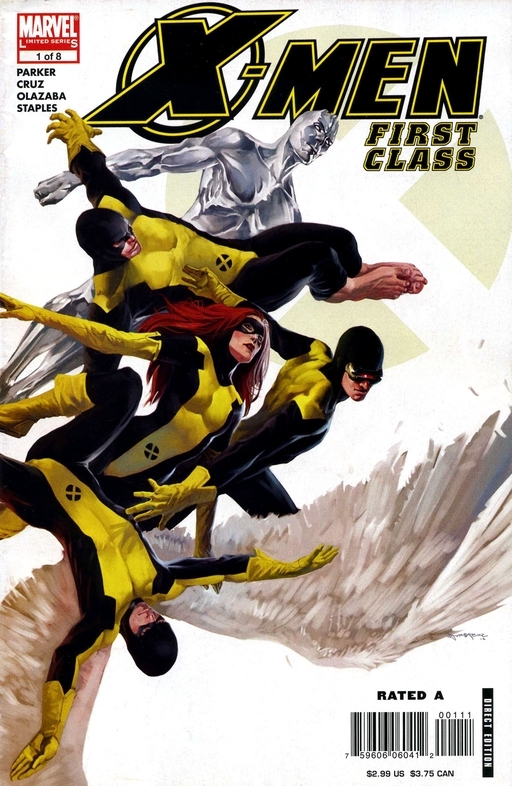
Stop looking at me like that, its not my fault half the interesting movie news is based in the superhero genre! Regardless, according to Cinematical, 20th Century Fox has hired a writer and producer for X-Men: First Class. Based on a Marvel Comics series of the same name, First Class tells an alternate origins story for everyone's favorite misunderstood mutants in their teenage years. The exact nature of the movie is up for grabs but it seems likely to focus mostly on the teenage members introduced in the last three films like Kitty Pride, Jubilee, Colossus and perhaps a few others.

First Class seems like a logical step to take after the absolute disaster that need not be mentioned by name here. After Brent Ratner single-handedly drove one of the very best superhero franchises out there into the ground, a simple sequel just wouldn't cut it. While a great deal can go wrong, the only real way to make a run at reviving the X-Men would be to get down to basics, something of an origin story where we can get reacquainted with characters who'd been buried in flashy stupidity. If someone with a serious artistic mind takes a look, there are still many, many wonderful and deep characters with all kinds of fulfilling stories ripe for the filming in the annals of X-Men history. If and ONLY if the right director is chosen, my faith in Hollywood will get a serious boost should the X-Men get the redemption they so rightly deserve.

Monday, November 17, 2008

Imagining the Cosmos-Star Trek: The Movie trailer

I'm a big fan of hammering the nails into my own coffin. I started with obsessive movie fan-dom, moved quickly onto uber comic book geek and political snob to now the revelation that I am half-Trekkie. Essentially I'm half Klingon but without the ridges (don't bother trying to understand, if you do, well, I feel your pain). Notice that I draw the distinction between half and full-fledged Trekkie; I've never been to a convention and I'm not familiar enough with the show to start waxing eloquent on the nature of the universe via the life lessons I've learned from Captains Kirk , Picard, Sisko, Janeway and Archer (alas, that list was from memory). Needless to say, half is more than enough to get psyched over the new trailer for J.J. Abrams' Star Trek, due in theaters May, 2009.

Let's face it, Abrams set an extremely high bar with the original promo which was quite possibly the best teaser I've ever seen, getting the audience excited about a movie they knew absolutely nothing about. When it came for a second run at prepping viewers for adventure amongst the stars, the man who brought us Lost, Mission Impossible III and Cloverfield didn't disappoint. The new view of Star Trek: The Movie that accompanied the opening of Quantum of Solace has everything a growing Trekkie needs, action, the fantasy of trekking through the cosmos, duking it out with crazy alien baddies and of course the interpersonal relationships that always made Trek so much more than an excursion amongst the space lanes.

Let's face it, we've always wondered what the cowboy of space was like when he beat the unbeatable simulation (Wrath of Khan) and now we know. James Tiberius Kirk was even more reckless as a youth, driving cars off cliffs and picking fights with the enigmatic Spock. The action is palpable, the adventure looks endless and the fun seems unbound. It's a completely new look at one of the most beloved science fiction universe's of all time with what promises to be the most visually compelling story modern CGI allows and a completely fresh take on the series. Of course, fresh doesn't always translate to good and there will always be the rough translation from the original cast to the new one.

It's been more than forty years since William Shatner brought the cavalier ladies man who always found a way around impossible odds into our hearts and minds, exploring the galaxy amidst bombshells of all species and fighting against oppression and tyranny wherever he went, all to the tune of endless Vulcan logic by Spock (Leonard Nimoy), accented quips about how engineering will save the galaxy by Scotty (James Doohan), barely discernible Captain, My Captain's by Chekov (Walter Koenig) and of course bitter soliloquies about why the universe sucks by Bones (DeForest Kelley).

Now its time for the new kids in town, with Chris Pine as Kirk, Zachary Quinto as Spock, Simon Pegg as Scotty, Anton Yelchin as Chekov and Karl Urban as Bones, a.k.a. Dr. McCoy. A solid casting without question, they are nevertheless not to be confused with their predecessors slash/older selves/slash original versions/slash a whole space-time conundrum of comparisons. Whatever they may be, the attitudes and screen presence is distinctly new and decidedly not the originals. Simon Pegg's Scotty is one who at least in the trailer seems like a dedicated comedic relief without any of the lovable wisps of warp drive fume induced wisdom that we found in James Doohan's version.

Zachary Quinto's stoicism seems forced in a way Leonard Nimoy never was when he portrayed the implacable and emotionless Vulcan without a shred of human irrationality. Perhaps it's intended and maybe even needed for the actually half-Vulcan, half-Human Spock, but Quinto seems more like a human pretending to be a Vulcan than Nimoy's Vulcan living amongst humans. Needless to say, this is only a trailer of a prequel we're talking about, but Karl Urban's Bones seems like the most displaced of all the new characterizations. I can almost imagine a younger DeForest Kelley saying "space is disease and danger wrapped in darkness and silence," but only almost. And more importantly Kelley said it like he meant it, a little depressed and yet contented that he knows how bad the world is with the advantage of telling everyone else 'I told you so.' I like Karl Urban, I really do, but his Bones seems too excited, too animated in his assertions, a Greek chorus keeping the audience appraised instead of the miserable yet brilliant old oracle in the corner.

I'm looking forward to Star Trek. I really am expecting explosions, fights with fist and lasers and maybe even a few photon torpedoes and a new breed of high tech adventure. But I'm also realistic about the limitations and expectations of a 2008 prequel to a series and its characters who were brought to life in 1966. I have faith in J.J. Abrams and Hollywood for revitalizing the fun, fantasy and eternal optimism of Star Trek, but it's tempered by the realization that the world has changed quite a bit in the 42 years since those elements became iconic.

Friday, November 14, 2008

Geekasm

To the uninitiated, I apologize. To my fellow defenders of the geek faith, I apologize even more. I'm here to tell you about the highlight of my month. Probably longer. I just met Alan Moore. I spoke to him. He spoke back. He signed my copy of Watchmen, and he took a picture with me. Afterwards, I walked out of the Victoria and Albert Museum in downtown London where he was taking part in a forum as part of what they're calling Comica, a series of comic book events. Once clear of the building, I jumped up and down, and did a little jig, doing a little dance, making a little love, getting down tonight. Why? Because I just met the greatest graphic novelist of all time, hands down.

The man who tears down every wall and barrier and preconceived notion, bathing it in illumination and fun and intense psychological exploration, and I met him. The man who deconstructed superheroes in the greatest of all graphic novels, Watchmen. The artist who crafted the ultimate battle of anarchism against totalitarianism in V for Vendetta. The genius who took us travelling back through time to the turn of the 20th century and into literary history with The League of Extraordinary Gentlemen. The colossus of a writer who took us down the dark, dank alleyways of London and into the path of the most notorious serial killer of all in time in From Hell.

Let's face it, I'm a fan. I'm a geek, a devoted follower. As I told Mr. Moore, no book has EVER made me think as much as Watchmen, and I do my fair share of thinking. The characters, the story lines, the psychology and action and mystery and excitement and anticipation of it shook me and wrenched me along on a ride through every shade of grade, laying out right and wrong and morality for all the world to see and explore, shaking off all taboos and destroying all hesitation. We see humanity's greatest hopes and fears and the lengths to which we will go to preserve our tiny corner of the world and of our soul, the chances we take and the limits we push. Did I mention I love Watchmen?

The topic of the forum was the graphic novel Moore and his wife and collaborating artist Melinda Gebbie recently produced, Lost Girls. Depicting Alice from Alice in Wonderland, Wendy from Peter Pan and Dorothy from The Wizard of Oz, Girls continues Moore's trend of deconstruction, analysis and chastisement of trends and genres and facets of society. Don't freak out, but in this case it's an exploration of pornography. Yes, Alan Moore wrote a piece of artful smut, deal with it. While admittedly I haven't read it, I want to, uptight as I may be it sounds like an incredible exploration of how we view erotica. I love the idea of contrasting society's outrage with smut to its seeming acceptance of violence and death, set against the backdrop of World War I.

At the end of the talk, I asked Mr. Moore if he ever considered how a conversation with Lewis Carroll or Bram Stoker would go were they alive for him to ask permission to use their characters in his own stories. In the classic fashion of the man who epitomizes the eccentric hermit artist, Moore replied at length that he simply didn't care, and even if he did, characters of such long ago artists are fair game. With an aura more of normalcy and nonchalance than I would ever expect from a modern day literary genius, he described the numerous instances of authors long before Moore's time, including those whose characters he employs in Lost Girls and League of Extraordinary Gentleman who had themselves used ideas and works by other artists. He finished the justification with the observation that with "all of these people's characters, the authors in some way seem to want to break down the barriers between their different fictions and just have all of their characters in some sort of massive wonderland where they, they all get together."
Of course, not everything is fair game for Moore, especially when asked about the upcoming Watchmen movie. Despite a calm and collected reply, Mr. Moore's words were scathing. The faith in Hollywood that I still struggle to maintain has been completely shattered for Moore, watching his works laid out on the silver screen in a way that he describes as "pathetic loads of vile films." Some would say that he is overreacting, that V and From Hell were spectacular movies that stayed as faithful to Moore's vision as such a transition would allow. I myself am a huge fan of V for Vendetta, but admittedly I have not read the graphic novel and I can only imagine how an artist of Moore's caliber would feel about any deviation from his vision. This is particularly evident in the introduction of Tom Sawyer to what was an entirely British cast of Extraordinary Gentleman and significant watering down to the point where the characters had lost all the moral ambiguity Moore had meant for them to have.
And so we come to my own lingering question. Do I still have faith in Hollywood? One of the closest things I have to an idol does not, but then I was never one for role models. My own cynicism is not that far off from Moore's, yet still there is a little boy deep inside who longs to leap onto the stage and into the screen, confident that next time they'll get it right, just one more movie and they'll see the light. Zack Snyder has reportedly changed the ending to Watchmen, a frightening prospect. Yet he has in every instance that I've heard, touted himself as a longtime fan of Moore's work and as a devoted filmmaker intent on producing as close a likeness as the constraints of two and a half hours will allow when making a graphic novel come to life that took me an entire week to read. Moore let go a long time ago, I still dangle from the ledge, praying that if anyone is to faithfully adapt one of the greatest works of literature of the last 30 years, it is the man who brought Leonidas and his Spartan guard roaring to life with all the glory imaginable.


Wednesday, November 12, 2008

Ridley Scott + Board Games=?

According to Cinematical.com, Ridley Scott is to direct a movie based off the board game Monopoly. Let it sink in, fester a little. Roll it off your tongue a few times. Wait for it. Wait for it. Yeah, Ridley Scott is playing with board games and I don't get it either. Not at all. I mean, yes Brett Ratner knows no shame and has no talent, but Ridley Scott!? The man who brought Maximus Decimus Meridius to life (if you don't know what that means, staple yourself to a chair and watch Gladiator 20 times, I'll know if you don't) is going to be directing a board game. What's more, according to Cinematical, Scott is planing on giving it a futuristic, Blade Runner-esq sheen. What that means I have not the foggiest clue. I know Scott got bad reviews for Body of Lies, but surely he's not so desperate for work that he felt compelled to make a movie like this. Ridley, you're scaring me hear, if you can sink to such lows, who can't? The mighty really can fall, and ever does my grip on Hollywood as the Titan of entertainment slip even further.

Monday, November 10, 2008

Helming Cap


After months of agonizing over who would take Captain America to new heights or new lows, the question has finally been answered. Steve Rogers and his alter ego will be brought to the silver screen by Joe Johnston, director of films like The Rocketeer, October Sky and Jurassic Park III. Still waiting on the man who will assume the mantle of one of the greatest of all superheroes, this can, I believe, be seen as good news. At the very least, it is not catastrophic news, there is no murderous intent, no crazy-eyed rage building up in my inner geek, although my feeling is less than ecstasy. Good directors have been known to make bad movies and mediocre directors have been known to make good movies. Personally I would say Johnston gravitates towards the former and he is certainly not the disaster that certain other directorial choices would have been.

For whatever its worth, I really enjoyed The Rocketeer for its fantasy and period nostalgia, an adventure with Tommy guns that took you soaring through the skies and battling, incidentally, the same kind of Nazi subversion Steve Rogers himself will be duking it out with come 2011. Johnston has also shown to be capable not just of high flying, explosive adventure but also character driven stories and science fiction/action-adventure that manages to develop and explore its characters, namely October Sky and Jurassic Park III. Johnston was also responsible for the steely eyed determination driving Hidalgo that is not that far off from the endless willpower of Steve Rogers. If he can guide the unity of man and horse to effectively triumph over the desert and enemies around every corner, I have faith in Johnston and in Hollywood for choosing him to helm the soldier boy from another age who fights for freedom and justice with every breath, to the last and beyond. Provided the rest of the puzzle falls in place, I think Captain America will be the Sentinel of Liberty he was always meant to be.